

The NASCAR logo font is a bold, custom sans-serif typeface that embodies speed, power, and a distinct American racing spirit. It’s characterized by sharp angles, a slightly condensed feel, and a strong, legible presence, making it instantly recognizable and influencing many sports and automotive designs.
Have you ever wondered about that distinctive font on NASCAR logos and merchandise? It’s more than just letters; it’s a powerful visual signature. Many designers find themselves captivated by its unique style, seeking to understand its secrets for their own projects. If you’ve struggled to identify or replicate that energetic feel, you’re in the right place. We’ll break down the elements that make the NASCAR logo font so effective and show you how to bring that same impact to your designs. Get ready to speed up your understanding of typography!
Unpacking the NASCAR Logo Font: What Makes It So Iconic?

The NASCAR logo font is a masterclass in conveying motion and strength through type. It’s not a standard, off-the-shelf font you’d find in every designer’s toolkit. Instead, it’s a highly customized typeface that perfectly mirrors the thrill and intensity of the sport it represents. Its design communicates power, speed, and a distinctly American heritage, making it instantly recognizable and deeply ingrained in the automotive enthusiast’s visual language.
The Anatomy of Speed: Key Characteristics
When we look closely at the NASCAR logo font, several defining features jump out. These aren’t random choices; they are deliberate design decisions meant to evoke specific feelings and associations:
Bold and Energetic: This font isn’t shy. Its weight and presence command attention, much like a roaring engine.
Slightly Condensed: Giving the letters a tighter fit enhances the feeling of focus and forward momentum, like a car hugging the track.
Sharp Angles and Edges: Straight lines meet at precise, often acute angles, adding to the sense of precision and dynamism. Think of a car cutting through the air.
Legibility at Speed: Crucially, despite its stylized nature, the font remains exceptionally clear and readable, even at a distance or on fast-moving vehicles. This is paramount for branding and signage.
A Touch of Americana: There’s an inherent robustness and straightforwardness to the design that resonates with traditional American industrial and sporting aesthetics.
Beyond the Official Mark: Inspired Typographic Trends
The influence of the NASCAR logo font extends far beyond official NASCAR branding. Its aesthetic can be seen inspiring other automotive brands, sports leagues, and even action-oriented businesses. Designers often draw inspiration from its successful blend of strength, speed, and clarity. This has led to a broader trend in which customized sans-serif fonts with sharp details and strong personalities become the go-to for conveying a sense of power and performance. Understanding these core elements helps you recognize this influence in various design contexts.
Decoding the “NASCAR Font”: Is There One Official Typeface?
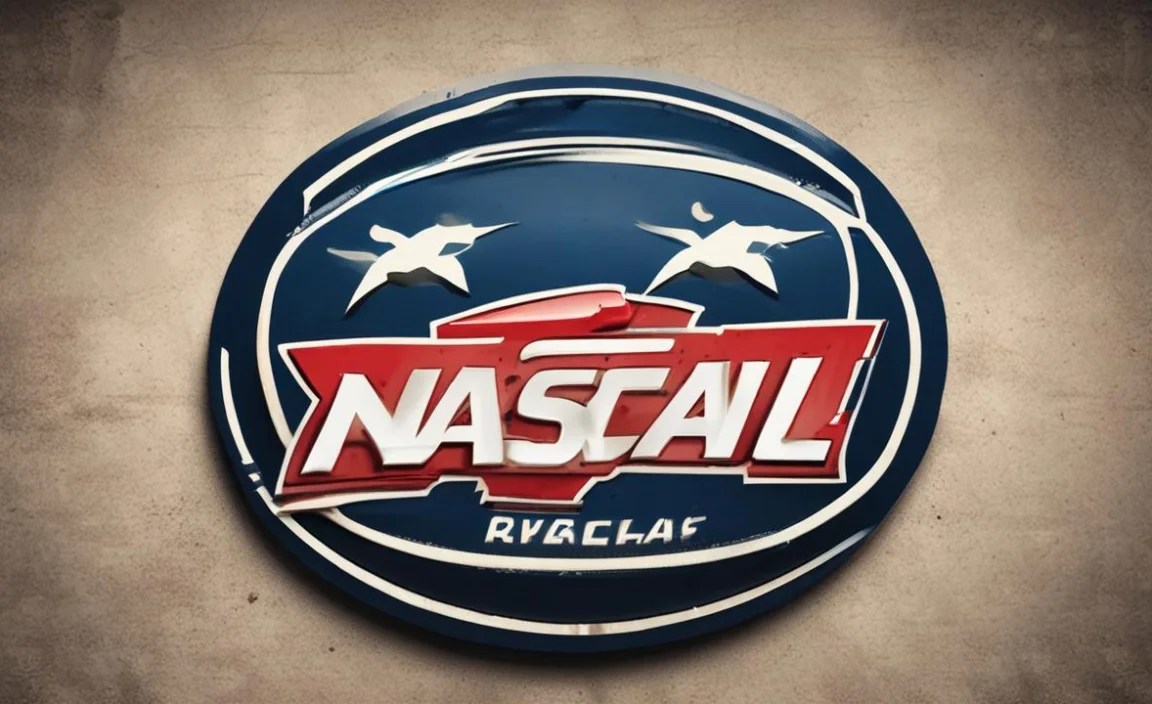
This is where things get interesting and often a source of confusion. The precise font used in the primary NASCAR logo has evolved over time and, importantly, is a custom-designed typeface. This means it was specifically created for NASCAR and isn’t something you can simply download and use.
However, NASCAR’s visual identity is more complex than just one logo. Over the years, and for various applications (like series branding, specific events, or merchandise), NASCAR has utilized or inspired the use of several distinct fonts. The most iconic “NASCAR font” people often refer to is the custom sans-serif seen in its primary wordmark.
The Evolution of the NASCAR Wordmark Font
NASCAR’s branding has seen several iterations. The core wordmark – “NASCAR” itself – has been re-designed to keep it fresh and relevant while retaining its core DNA. Early versions might have shown subtle differences in letterform construction or spacing. The modern iterations typically feature a heavily modified sans-serif that is both impactful and incredibly readable.
Fonts Like the NASCAR Font: Finding Similar Styles
While you can’t use the actual NASCAR logo font without proper licensing (which is generally not available for public use), designers often look for fonts that capture a similar essence. These are typically bold, geometric, or slightly condensed sans-serifs. Some popular font categories and examples that echo the NASCAR aesthetic include:
Geometric Sans-Serifs: Fonts built on simple geometric shapes (circles, squares, triangles) often provide a clean, modern, and strong foundation.
Slab Serifs with a Twist: While the main logo is sans-serif, some associated NASCAR branding can incorporate industrial-feeling fonts.
Futuristic or “Techno” Fonts: Some display fonts designed for a high-tech or futuristic feel can share the sharp angles and condensed nature.
We’ll explore some of these stylistic similarities further in our design secrets section.
Essential Design Secrets of the NASCAR Logo Font

Understanding the NASCAR logo font isn’t just about identifying it; it’s about learning from its design principles. These secrets can elevate your own branding and graphic design projects.
Secret 1: The Power of Customization
Why it matters: A custom font is unique. It’s a visual fingerprint that distinguishes a brand entirely. The NASCAR font isn’t generic; it was crafted to be as distinct as the sport itself.
Application for you: Even if you can’t commission a custom font, look for fonts that have unique characteristics. A slight modification to an existing font (like tweaking letter spacing or adding subtle stylistic alternates) can make it feel more bespoke.
Secret 2: Boldness as a Statement
Why it matters: The font is inherently bold. This signifies strength, confidence, and importance. It’s a visual declaration that NASCAR is a serious player.
Application for you: Use bold weights strategically for headlines, calls to action, or elements you want to stand out. Ensure your chosen bold font maintains readability.
Secret 3: The “Speed” Angle
Why it matters: Many letterforms have subtle, sharp angles that mimic the cutting edge of speed. Think of the apex of a turn or the point of a racing car. This active styling injects energy.
Application for you: Explore fonts with sharp terminals, pointed ascenders or descenders, or geometric constructions that suggest forward motion. These details can add dynamism without sacrificing clarity.
To illustrate the qualities we’re discussing, consider this comparison of font styles:
| Font Characteristic | NASCAR Logo Font Essence | Design Impact | Application Examples |
|---|---|---|---|
| Weight | Heavy, Bold, Dominant | Creates strong presence, conveys power. | Headlines, Key branding elements, Call-to-action buttons. |
| Style | Custom Sans-Serif with sharp details | Unique, energetic, modern, and fast-paced feel. | Sports logos, Automotive branding, Tech company identities. |
| Form | Slightly Condensed, Geometric influences | Saves space while commanding attention, implies focus. | Short, impactful slogans, Compact logos, Posters. |
| Legibility | High, even at a distance | Ensures brand message is clear and accessible across all media. | Signage, Apparel, Digital interfaces, any context where clarity is vital. |
Secret 4: Strategic Simplicity for Broad Appeal
Why it matters: Despite its custom nature, the font isn’t overly ornate. It’s built on fundamental letterforms, making it accessible and relatable to a wide audience. This simplicity ensures it functions well across diverse media, from a tiny sticker to a massive billboard.
Application for you: Don’t let unique details overwhelm essential legibility. A clean, well-constructed font with a few distinctive features is often more effective than a font that is too complex. Prioritize clarity for your primary message.
Secret 5: Consistency is Key
Why it matters: The NASCAR logo font has been used consistently to represent the brand. This consistency builds recognition and trust. When people see the font, they immediately think of NASCAR.
Application for you: Once you establish a primary font for your brand or project, stick with it. Consistent typography reinforces your brand identity and makes your communication more effective over time.
Finding Fonts with a NASCAR “Vibe”
For designers looking to capture a similar energy without using the actual NASCAR font, the hunt is on for fonts that share its spirit. This often means exploring specific categories of typefaces.
Geometric Sans-Serifs: The Foundation
Many fonts that evoke the NASCAR aesthetic are rooted in geometric principles. These fonts are built using simple shapes like circles, squares, and triangles, giving them a clean, modern, and often robust feel.
Key characteristics to look for:
Uniform stroke widths (monolinear) or closely approximating them.
Circular or near-circular uppercase “O”s.
Sharp, precise terminals (the ends of strokes).
Often have a slightly condensed or neutral width.
When you type “geometric sans-serif fonts” into a search engine, you’ll find a vast array of options. Some popular examples that might hint at the NASCAR style include fonts like:
Montserrat: A popular, versatile geometric sans-serif with a strong, friendly presence.
Lato: While known for its soft curves, its geometric underpinnings provide a clean structure that can be made impactful with bolder weights.
Oswald: A particularly good example of a condensed sans-serif, often used for headlines where space is limited but impact is crucial. It shares a strong, forward-leaning feel.
These are great starting points because their inherent clarity and structure can be enhanced with styling that suggests motion and power.
Display Fonts with Automotive Flair
Beyond basic geometric sans-serifs, there are display fonts specifically designed to convey speed, technology, or a strong athletic presence. These are often more stylized and best used for headlines, logos, or short bursts of text where impact is paramount.
What to search for: “Sports fonts,” “racing fonts,” “tech fonts,” “stadium fonts,” “display sans-serifs.”
When choosing these:
Check legibility: Ensure they aren’t too stylized for smaller sizes or longer text.
Consider the specific “vibe”: Do you want pure speed, industrial grit, or modern sleekness? The name and appearance of the font will usually give clues.
Look for unique angles: Many of these fonts will incorporate sharp cuts, slanted terminals, or other stylistic elements that mimic motion.
Resources like Google Fonts, Adobe Fonts, and marketplaces like MyFonts or FontSpring offer extensive libraries where you can filter by style and keyword. For instance, searching for “sports font” on Google Fonts might bring up options that, with careful selection of weight and context, can feel very much in the NASCAR vein.
Crafting a Visual Hierarchy
The NASCAR logo font works because it’s part of a cohesive visual system. The font is used in conjunction with other design elements to create a clear hierarchy of information.
Headlines: Typically use the boldest, most impactful version of the font.
Subheadings: Might use a lighter weight or a slightly different, complementary font.
Body text: Requires high readability, often using a less stylized, more neutral sans-serif or sometimes a legible serif.
Understanding this hierarchy is crucial. The powerful NASCAR logo font shines because it’s not trying to do the job of small print. It’s reserved for its most impactful moments.
Applying the NASCAR Font Secrets to Your Designs

Now that we’ve decoded the essence of the NASCAR logo font, let’s explore how you can borrow from its success in your own design projects. Whether you’re a graphic designer, a blogger, or a business owner, these principles can help you create stronger visuals.
1. Define Your Brand’s “Speed” or “Power”
Ask yourself: What core feeling do I want my brand to evoke? Is it speed, strength, innovation, tradition, or something else?
How to apply: Choose a font that visually aligns with this feeling. For power and speed, look for bold, impactful sans-serifs with a sense of forward momentum. For innovation, perhaps a cleaner, more geometric sans-serif. For tradition, a classic serif might be more appropriate.
2. Prioritize Legibility Above All Else
Why it’s crucial: No matter how stylish a font is, if people can’t read it, it fails. The NASCAR logo font is incredibly readable, a testament to good design.
Practical tips:
Test in different sizes: Ensure your chosen font looks good and remains clear on screens, in print, and at varying scales.
Consider kerning and tracking: Adjusting the space between letters (kerning) and overall letter spacing (tracking) can significantly improve readability. Many design tools allow these adjustments.
Don’t overuse display fonts: Reserve highly stylized fonts for headlines and short text. Use simpler, highly legible fonts for body copy.
3. Use Boldness Strategically
The “loudest” voice: Bold fonts naturally draw the eye. Use them to highlight the most important information – your main headline, a key product feature, or a compelling statistic.
Pairing strategy: Often, a bold display font for headlines pairs well with a lighter or regular weight of the same font, or a complementary, simpler sans-serif for body text. This creates a balanced visual hierarchy.
4. Emulate Dynamic Angles (Subtly)
Injecting energy: If your brand needs to feel dynamic or cutting-edge, look for fonts with subtle sharp angles, pointed terminals, or italic variants that lean forward with conviction.
Avoid overdoing it: You don’t need a font that looks like it’s constantly in motion. A few well-placed sharp details can suggest speed without becoming distracting.
5. Consistency Builds Recognition
Your visual signature: Just as the NASCAR font is synonymous with the brand, your chosen fonts become part of your identity.
Create a style guide: Document your primary and secondary fonts, specifying when and how to use them. This ensures consistency across all your communications and makes your brand instantly recognizable to your audience. Resources like The Typography Manual provide excellent guidance on consistent typographic application.
Understanding Font Classifications: Where Does the NASCAR Font Fit?
To better understand why the NASCAR logo font looks and feels the way it does, it’s helpful to place it within broader font classifications.
Sans-Serif: The Clean Canvas
The primary NASCAR logo font is a sans-serif typeface. This means it lacks the small decorative strokes (serifs) found at the end of letter strokes in fonts like Times New Roman.
Pros of Sans-Serifs:
Modern and clean appearance.
Excellent readability on digital screens.
Often conveys a sense of efficiency and directness.
Versatile for various applications.
Cons of Sans-Serifs:
Can sometimes feel too generic if not chosen carefully.
May lack the traditional or formal feel of serifs for certain contexts.
The NASCAR font leverages the strengths of the sans-serif category, offering a bold, no-nonsense platform for its branding.
Geometric Sans-Serif: Precision and Form
As mentioned earlier, many fonts that echo the NASCAR style fall into the “geometric sans-serif” subcategory.
Key features:
Based on geometric shapes like perfect circles and straight lines.
Often have a modernist feel.
Can sometimes feel a bit rigid if overused.
Fonts like Futura or Avant Garde are classic examples of geometric sans-serifs, and you can see how their clean structures lend themselves to strong, impactful branding.
Display Fonts: The Showstoppers
While the core NASCAR logo font is highly functional, many related racing or sports-themed fonts fall into the “display” category.
What are Display Fonts: Designed for large sizes and short bursts of text, prioritizing visual impact over extended readability.
Where they shine: Headlines, logos, posters, album covers.
Caution: Never use display fonts for body text. They are meant to be decorative and attention-grabbing, not for conveying large amounts of information.
Common Pitfalls to Avoid When Emulating the Style
Trying to capture the NASCAR logo font’s essence is exciting, but it’s easy to stumble. Here are a few common pitfalls:
Overemphasis on Style: Choosing a font that is so heavily stylized that it compromises readability. Remember the NASCAR logo is crystal clear.
Ignoring Context: Using a font that feels too aggressive, too “racing,” or too “American” for a brand that needs a softer, more corporate, or global image.
Font Overload: Using too many different fonts on a single project. This creates visual chaos and weakens your brand message. Stick to a primary and a secondary font for most projects.
Ignoring Licensing: Using the actual NASCAR logo font or attempting to mimic a specific custom font too closely without understanding copyright and licensing. Always opt for fonts that are legally available for your intended commercial use.
FAQ: Your NASCAR Logo Font Questions Answered
Here are answers to some common questions about the NASCAR logo font and typography inspired by it.
Q1: Can I download and use the official NASCAR logo font for my business?
A1: No, the exact font used in the primary NASCAR logo is a custom-designed typeface owned by NASCAR and is not available for public download or use without specific commercial licensing, which is typically not granted.
Q2: What kind of font is the NASCAR logo font most like?
A2: It is most closely related to a bold, slightly condensed, custom sans-serif typeface. It often incorporates geometric elements and sharp angles to convey speed and power.


